Medication Reminder Technology Explained: How Smart Alerts and Caregiver Notifications Improve Adherence
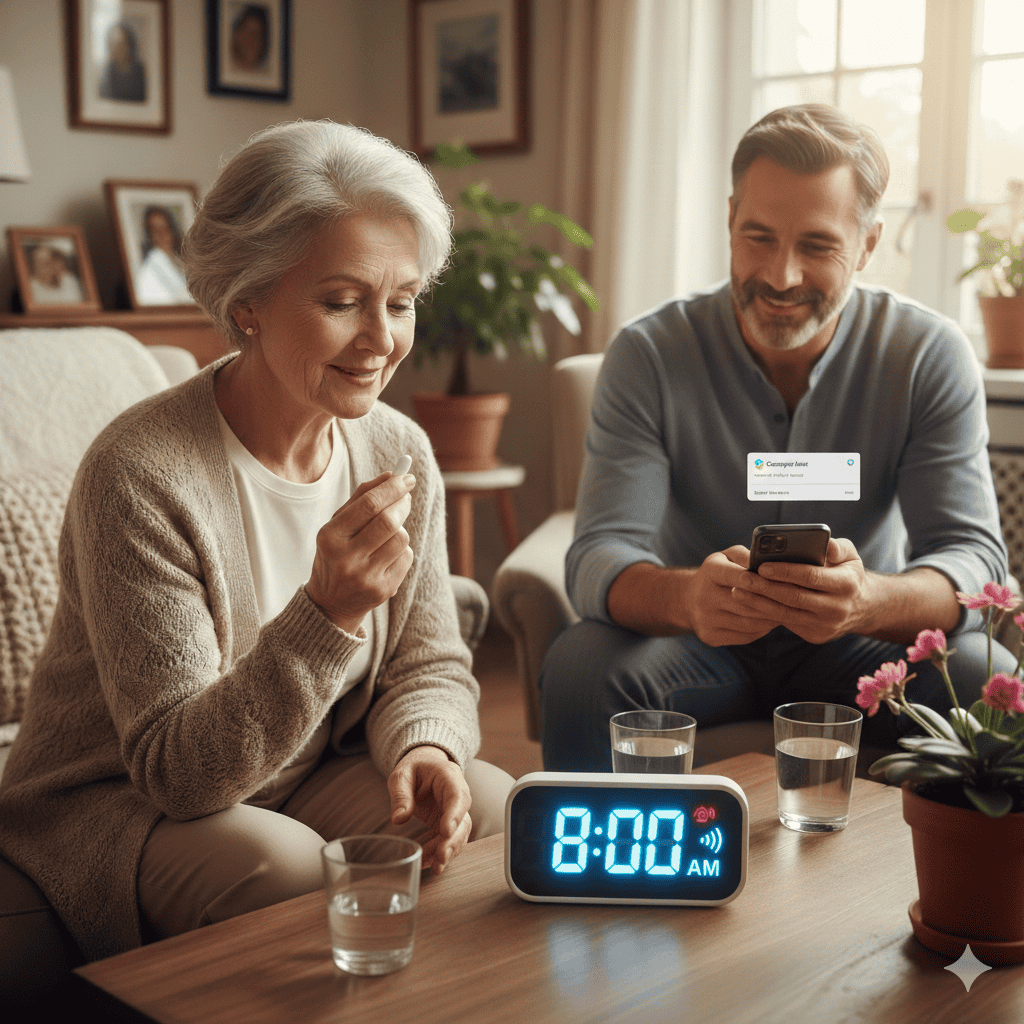
Medication adherence remains one of the most significant challenges in senior healthcare. Forgetfulness, complex schedules, and a lack of consistent monitoring often lead to missed or incorrect doses. Fortunately, modern medication reminder technology has evolved far beyond the limitations of traditional pill boxes. Today’s smart systems combine multimodal on-device alerts, mobile notifications, and shared caregiver updates to dramatically improve consistency and safety.
What Is Medication Reminder Technology?
Medication reminder technology refers to digital systems such as a smart pill organizer, an automatic pill dispenser, or a connected medication management device. These systems are designed to remind users when it is time to take medication, reduce sorting errors, provide adherence tracking, and alert caregivers if a dose is missed. Unlike traditional weekly pill boxes, smart systems create an active reminder environment instead of relying solely on memory.
The Power of Multimodal On-Device Alerts
One of the most important advancements in medication adherence is multimodal alerting. Instead of a single simple alarm, modern smart pill organizers use multiple alert types simultaneously.
Audible alerts use clear tones to signal it is time for a dose, while visual alerts like flashing lights provide immediate confirmation. Some devices also include on-screen prompts with specific instructions. This layered approach is vital because seniors may experience hearing loss, vision limitations, or cognitive distractions. By combining audio and visual cues, multimodal alerts ensure the reminder is noticed even if one signal is missed.
Why On-Device Alerts Outperform Phone Alarms
Many families rely on smartphone alarms, but these have limitations. A phone may be in another room, the device might be on silent mode, or a senior may simply not feel comfortable navigating a smartphone. A smart pill organizer provides a persistent, physical reminder at the exact location of the medication, making adherence more intuitive and reliable.
Mobile Notifications: Extending the Safety Net
Modern automatic pill dispensers often connect to mobile apps to provide real-time notifications and medication history tracking. These mobile notifications serve two functions: they remind the senior directly and they inform caregivers when action is needed. This creates a system of accountability rather than relying on guesswork.
Shared Notifications: A Game-Changer for Caregivers
Shared notifications are among the most powerful features of modern reminder technology. When alerts are shared with adult children, spouses, or professional caregivers, families gain visibility into medication adherence without being physically present. For seniors aging in place, this provides greater independence and less intrusive supervision. For caregivers, it reduces anxiety by providing confirmation instead of uncertainty.
How Shared Alerts Improve Adherence
Shared notification systems improve adherence because seniors know someone else is aware of their routine. Caregivers can follow up quickly if a dose is skipped, and patterns of missed doses become visible so adjustments can be made proactively. This collaborative approach significantly reduces long-term non-adherence.
Beyond Reminders: Building a Medication Routine
Technology works best when paired with a structured routine. A smart pill organizer combined with timed alerts, mobile reminders, and caregiver oversight creates a complete adherence ecosystem. Instead of relying on memory alone, the system supports the user at multiple levels to ensure safety.
Why Traditional Pill Boxes Fall Short
Standard weekly pill organizers are passive tools. They provide no active reminders, offer no caregiver visibility, and require constant manual refilling. Most importantly, they cannot confirm if medication was actually taken. In contrast, modern medication reminder technology is proactive and data-driven.
Final Thoughts
Medication adherence is not just about remembering; it is about building a reliable system. Multimodal on-device alerts ensure reminders are seen and heard, while mobile notifications and shared alerts bring caregivers into the loop without compromising independence. Together, these features create a safer and more dependable solution than any traditional pill box. For families seeking better consistency, connected reminder technology offers the structure and peace of mind necessary for healthy aging.